Home > Media Centre >
WHY NOT WALK? - VISIT BATH AND MAKE NEW DISCOVERIES IN TOWN AND COUNTRY
Bath is encouraging visitors this spring and summer to combine visiting the area's attractions with taking a stroll and getting out and about. A booklet called " Why Not Walk", produced by Bath and North East Somerset Council and available free of charge from the Bath Tourist Information Centre, highlights nine short walks through the city's parks and gardens and the benefits of walking, something everyone can do, young or old, at their own pace.
Research shows that walking 30 minutes every day can lengthen your lifespan by improving heart and circulation, lowering blood pressure and improving flexibility and strength. In England obesity levels have risen by 50 per cent in a decade and obesity is now the second highest cause of death after cancer ( according to the World Health Organisation 2001). Walking has also been proven to improve mental health and well-being.
Whilst Bath is the ideal city to explore on foot, anyone who enjoys exploring would feel cheated if they did not spend some time walking in the picturesque countryside around Bath.
WALKING TO DISCOVER BATH'S HIDDEN SECRETS
Bath is a highly compact city best explored on foot and the Mayor of Bath's Honorary Guides offer daily free two-hour tours, no pre-booking required, starting from outside the Pump Room in the centre of the city. Specialist walks also abound such as the Jane Austen Walking Tour, whilst themed walks are timed to coincide with the city's major literary and music festivals. Those looking for something a little more quirky can take a Bizarre Bath evening tour or a Ghost Walk starting at the haunted pub, the Garrick's Head, next to Bath's Theatre Royal.
EXPLORE THE BATH SKYLINE WITH THE NATIONAL TRUST
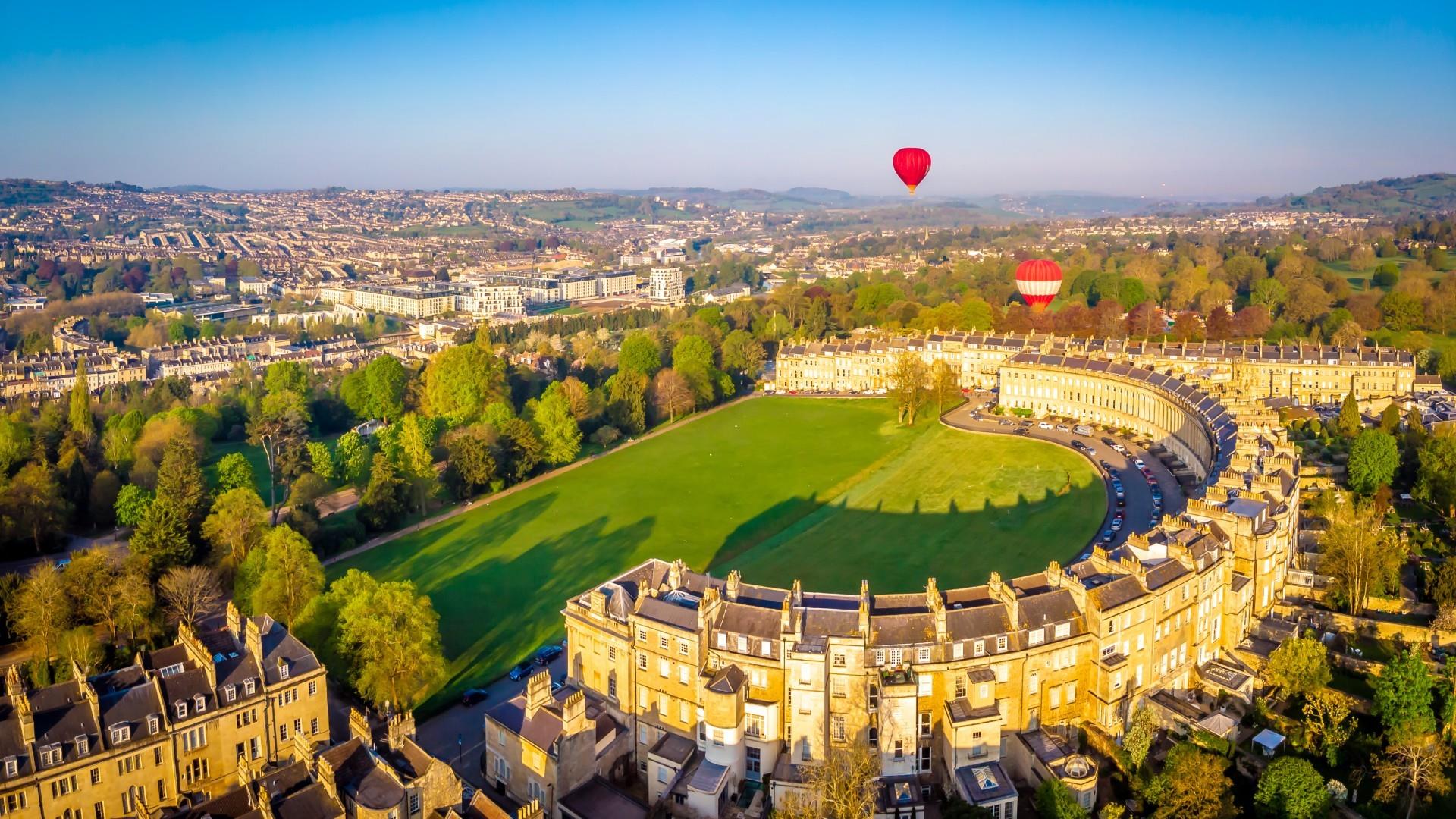
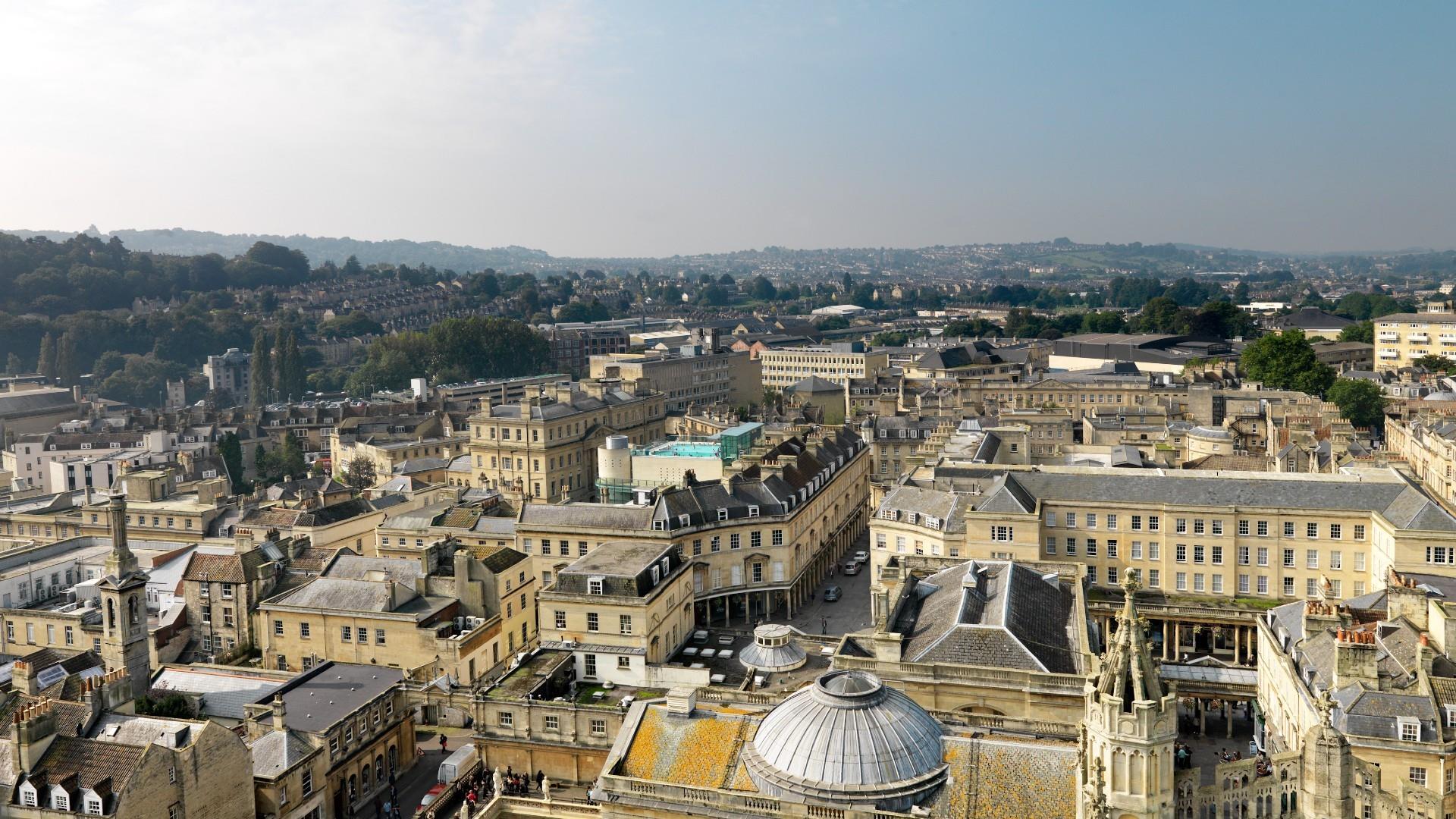
Getting into the countryside from Bath takes only a few minutes because Bath is not the kind of city with suburbs that stretch on and on. It is built in a bowl with seven surrounding hills so no matter where you are the countryside is always in view. The land around the skyline is largely owned by the National Trust which manages 500 acres of woodlands and meadows . The six mile Bath Skyline walk is a great vantage point to enjoy spectacular views of Georgian Bath and the green hills beyond. Not wishing to create a carpark on the skyline, the National Trust ask visitors to take a bus from the centre to the start of the walk at the University of Bath. The Bath Skyline map and directions are available from the Tourist Information Centre and from nearby National Trust properties such as Dyrham Park and Stourhead, both of which also have great estates for walkers
HOW THE WEST WAS WON - FOLLOW THE EXPLORERS TRAIL AT THE AMERCAN MUSEUM AT CLAVERTON DOWN
The American Museum in Britain at Claverton Manor is a pleasant diversion for walkers following the Bath Skyline walk. Follow in the steps of intrepid American explorers through the 120 acre grounds that include an arboretum of rare American trees and a replica of George Washington's Mount Vernon Garden. To commemorate the 200th anniversary of the first trail blazing expedition from the east to the west coast of the US, the Lewis and Clark trail is named in honour of these explorers who collected many botanical samples along the way.
The American Museum is set in magnificent grounds overlooking the Limpley Stoke Valley. As well as its superb collection of American decorative arts, tea and homemade cakes are served on a lovely terrace with panoramic views.
THE KENNET AND AVON CANAL
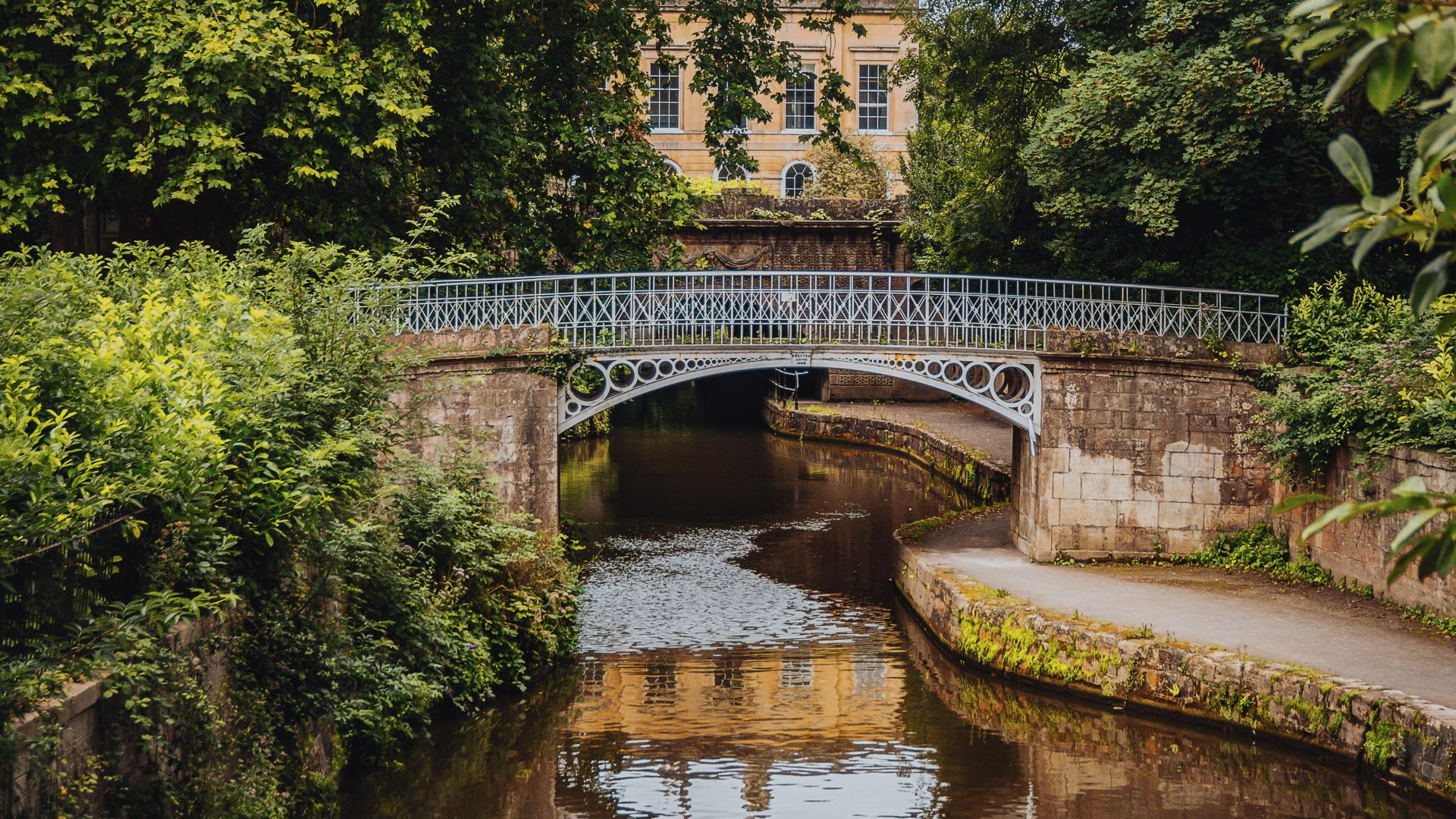
A lovely walk along the canal towpath takes you out of Bath and on through the Limpley Stoke Valley towards Bradford on Avon. Starting from the Holburne Museum located at the end of Great Pulteney Street, the canal takes you past the "George" at Batheaston, a fine hostelry with an extensive menu. It was here, in the late Eighteenth Century, that the mortally wounded Viscount du Barry was brought having fought the last legal duel in Britain. It is said that he now haunts the old inn.
The Limpley Stoke valley is designated an Area of Outstanding Natural Beauty and it is not difficult to see why. The Kennet and Avon Canal was completed in 1810 but, with the coming of the railway thirty years later, fell into disrepair. It has now been restored to its former glory and has become popular for walking and cycling and is busy with colourful narrowboats. The nearest place to get on board is at Bath Narrowboats at Sydney Wharf who offer a charter service for parties and individuals. Sydney Wharf was once the commercial heart of Bath's thriving canal trade which handled 341,000 tonnes of freight at its peak.
CANAL ENGINEERING FEATS
Between Bath and the Medieval wool town of Bradford-upon-Avon, there are two aqueducts straddling the River Avon. The Dundas Aqueduct is an impressive example of industrial architecture completed in 1804 with grand doric columns of Bath stone. At Avoncliff the aqueduct crosses high over the River Avon and the Cross Guns pub offers welcome refreshment in its gardens overlooking the weir. Sitting in the beer garden watching the kingfishers is a delight. There are also charming walks from Avoncliff along the River Avon towards Freshford and to Iford Manor with its Italianate Peto gardens.
GREEN VALLEY COVERS INDUSTRIAL SPAGHETTI JUNCTION
Many walkers like to find out more about the terrain they are passing through and its rural heritage. To the south-west of Bath lies the glorious Midford Valley with charming villages like Combe Hay and South Stoke ( all of which have a good village pub serving food). It is difficult to imagine that tranquil Midford was once at the centre of a network of canals and railways serving the Somerset Coalfield. In 1815 Midford was the point where coal which had been hauled by horses from the railhead at Radstock was transferred to barges on the Somerset Coal Canal. An eight arched viaduct took the Somerset and Dorset Railway across the valley taking it over the Great Western Railway branch line and the canal as well as the Bath Road.
THE COLLIERS WAY
For those with a penchant for industrial heritage, the Colliers Way now takes advantage of many of these defunct railway tracks. The route commences in Radstock where the Radstock Museum is well worth visiting to learn the story of life in the North Somerset Coalfields. Steeped in history, the route also passes Kilmersdon where the story behind the Jack and Jill nursery rhyme comes form and Mells where Little Jack Horner supposedly obtained the deeds to Mells Manor after they were hidden in a pie.
SCIENTIFIC HERITAGE TRAIL
The Bath Scientific Heritage Trail offers fascinating insights into Bath's industrial past. Although Bath City Corporation played it down at the time so as not to discourage tourists, by the end of the Victorian age, Bath was a self-sufficent industrial town. It made its own electricity and gas, brewed its own beer, milled flour, wove cloth and exported all kinds of things from massive dockland cranes to shorthand pads. The Trail takes in the Museum of Bath at Work and the Building of Bath Museum as well as the birthplace of inventions from plasticine to the cinema. 2006 marks the celebration of 200 years since the birth of the engineering genius, Isambard Kingdom Brunel who was responsible for the Great Western Railway connecting London with the port of Bristol. Bath Spa station presented a particular challenge as both ends of the platforms had to be supported on bridges over the River Avon. His engineering genius is very much in evidence in nearby Bristol. A leaflet on the trail is available from the Bath Tourist Information Centre.
THE COTSWOLD WAY
If distance presents no challenge some of the country's best known long distance paths pass through the area. The Cotswold Way ends its 104 mile journey from Chipping Camden at Bath Abbey. There is no better way of discovering how quickly you reach the rolling hills than walking out from Bath at Weston towards Kelston Round Hill and the lovely villages of Upton Cheyney and North Stoke.
TAILOR MADE WALKING HOLIDAYS
Companies like Bath and West Country Walks are specialist walking tour operators with the option of tailor-made, guided or self-guided itineraries. From Bath they map a route to Bradford on Avon, Mells and Chilcompton and on to Wells. Reassuringly, they book accommodation ahead and will ensure that the luggage is transported to the next port of call. They even provide packed lunches.
A WELL EARNED REST!
Some walkers like to feel that they have earned some pampering at the end of the day and Bath's hotels and independent guest houses will offer weary visitors a warm welcome. Bath has accommodation for every pocket and there are bed and breakfast and self-catering options throughout the region for those looking for an informal base, as well as youth hostels for those on a budget. There are plenty of examples on www.visitbath.co.uk where you can also check availability against your chosen dates and book online. Inviting pubs and tea rooms both in and around Bath also offer well deserved refreshments for thirsty and tired walkers.
The Wheelrights Arms in Monkton Combe, just two miles from the centre of Bath, would make an ideal base for walkers. After a complete renovation the pub/restaurant is now open for business and is gaining a strong reputation for the standard of food thanks to their chef who trained at Rules in Covent Garden. The adjacent wheelrights building has been cleverly converted into seven comfortable rooms with spacious en-suite bathrooms. Walkers are especially welcome with no less than seven recommended walks starting from Monkton Combe itself.
Walking does not need to involve vast expense but it is worth bringing comfortable footwear and waterproofs. Bath is also a retail haven so if walking the hills and valleys is not for you, why not simply take your exercise on your very own shopping trail.