



Home > Eating and Drinking > Local Bath Flavours > Local produce
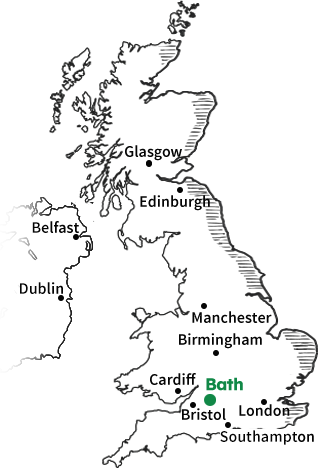
The location of Bath - nestled in among some of the most beautiful and bountiful west-country landscapes - have led to the city and surrounding area becoming known as a centre for the freshest traditional west-country regional foods.
If there is a food associated with Somerset, it has to be cheese and there is plenty of cheese in Bath and the surrounding area. The Fine Cheese Company on Walcot Street stocks 150 varieties of which two thirds are British. There are plenty of opportunities for sampling and the cheese shop has its own cafe next door. Paxton and Whitfield, with no less than three Royal Warrants to their name, have a shop in John Street offering a vast array of cheeses and related merchandise.
At the start of the twentieth century there were some 3500 traditional farmhouse cheddar cheese makers but today the figure has dwindled to two dozen. Cheddar is typically produced as a collaborative effort with farmers pooling their milk to make the cheese. The objective was to create a large cheese using up surplus milk and cheddar was one of the hardest cheeses so it has longevity. Cheddar has been in production for eight hundred years and the largest cheese ever made in 1839 was for Queen Victoria when a half-ton cheese with a circumference of nine feet was produced.
The Bath Soft Cheese Company produces hand-made cheese from their own herd. Bath Soft Cheese is a full fat soft cheese that is white mould ripened and square in shape and at least one pound in weight. The cheese dates back to Admiral Lord Nelson who was sent one by his father in 1801. Named after the parkland where the herd sometimes graze, Kelston Park is also white mould ripened but round in shape. Bath Blue and the Wyfe of Bath are other popular cheeses.
With the Roman connection with Bath perhaps it is not surprising to find a winery on the outskirts of the city. Mumford's Vineyards is a family business with four acres of vines and a purpose-built winery to the east of Bath where production includes a number of white wines, red and an award-winning rose. Visitors can buy wines for a picnic in Waitrose, order on line or visit the winery in person.
The Beauty of Bath apple was first grown by Mr Cooling near Bath in 1864. It is one of the earliest eating apples and used to be grown extensively by commercial orchards but is less popular nowadays as it has a shelf-life of only two weeks. It is pleasantly sharp, sweet and juicy.
Somerset has always been renowned for its apples and 156 varieties trace their origins to the area. The ancient name for Glastonbury was Avallon which means "the Isle of Apples" in the ancient British language. Today, Somerset is still famous for its apple orchards, apple cider and apple wines. The National Trust aim to restore the orchards that once grew around Glastonbury Tor and have planted traditional varieties of cider apple trees in the Wellhouse Lane Orchard. The Somerset Rural Life Museum tells the story of cider making and other traditonal country pursuits.
Old varieties of cider apple such as Dabinett, Kingston Black, Yarlington Mill and Harry Masters are among those used by the Somerset Distillery. Their cider brandy is stored in barrels which give the apple juice some colour as it ferments and draws off some of the alcohol content "the angel's share". For connoisseurs, the brandy is aged for ten years to make Somerset Ten Year Old Cider Brandy.