Bath’s history begins with its hot springs. The Romans built a temple and bathing complex around them and named the town Aquae Sulis. In the Georgian era Bath became a fashionable spa city, and much of the architecture it’s known for today was built then. It’s now the only city in the UK designated a UNESCO World Heritage Site in its entirety, and in 2021 it received a second inscription as part of the Great Spa Towns of Europe.
This Bath history timeline runs from the city’s earliest days to the present, with links to the places, people and stories behind each moment. To plan a visit, see our guide to historic sites and heritage attractions in Bath.
Jump to: Early Bath | Roman Bath | Saxon and Medieval Bath | Tudor and Stuart Bath | Georgian Bath | Victorian Bath | Bath in the 20th century | Bath in the 21st century
Early Bath and the legend of Bladud
c. 8000 BC: People gather at the hot springs
Archaeological evidence suggests there was human activity around the hot springs on which Bath is built as far back as 8000 BC.
Find out more: What does water mean to Bath?
c. 3,000–1,600 BC: Stonehenge is built nearby
Just under an hour’s drive from Bath, Stonehenge was erected between 3,000 BC and 1,600 BC.
863 BC (legend): Prince Bladud founds Bath
According to legend, Prince Bladud founded the city around the hot springs in 863 BC. The tale features a diseased prince, a herd of pigs and a mysterious hot mineral spring.
Find out more: The remarkable tale of King Bladud and his pigs
Roman Bath
c. AD 60–70: The Romans build Aquae Sulis
The Romans built a temple and a bathing complex around the hot springs and named the place Aquae Sulis, meaning “the waters of Sulis”. The bathing complex was added to over the following centuries. Today you’ll find some of the best-preserved Roman remains in the UK at The Roman Baths.
Saxon and medieval Bath
577: Bath comes under West Saxon control
After the Battle of Dyrham in 577, Bath came under the control of the West Saxons.
973: Edgar is crowned at Bath Abbey
On 11 May 973, Edgar was crowned king of England at Bath Abbey, in a ceremony that formed the basis of later English coronations. Bath Abbey is still at the heart of the city.
Tudor and Stuart Bath
1499: The present Abbey church is begun
The church that stands today was begun in 1499.
1539: The monastery is dissolved
Bath’s Benedictine community was dissolved in 1539, during the Dissolution of the Monasteries.
1574: Elizabeth I visits Bath
A visit by Queen Elizabeth I helped revive Bath’s reputation as a health resort.
Georgian Bath
1702–1703: Queen Anne visits Bath
Royal visits helped make Bath fashionable. Queen Anne visited in 1702 and 1703, and walks and shops were laid out in what is now Orange Grove.
About 1704: Beau Nash becomes Master of Ceremonies
Richard “Beau” Nash took charge of Bath’s social life and set the rules for visitors to the spa city. High society flocked to the Pump Room for the waters, which they believed would relieve their illnesses and discomforts.
Find out more: Famous People from Bath
1720s: John Wood the Elder and Ralph Allen reshape the city
Around 1725, John Wood the Elder presented his plans for the city to Ralph Allen. Allen supplied the honey-coloured Bath stone from his mines at Combe Down and Bathampton Down, and Wood began laying out Queen Square in 1728. The garden of Allen’s estate can still be visited at Prior Park Landscape Garden.
Find out more: Bath architecture
1755: John Wood the Elder dies and the Circus is completed
John Wood the Elder died in 1755, and his son, John Wood the Younger, completed the Circus, a ring of townhouses with classical Roman and British Pagan influences.
1767–1775: The Royal Crescent is built
John Wood the Younger built the Royal Crescent, a sweeping curve of townhouses in honey-coloured Bath stone. You can step inside one at No.1 Royal Crescent.
1769–1774: Pulteney Bridge is built
Pulteney Bridge is lined on both sides with shops, and is one of just four such structures left in the world.
1771: The Upper Assembly Rooms open
The Assembly Rooms opened with a grand ball in 1771 and were at the centre of the social scene for the rest of the eighteenth century.
1780–1798: Admiral Nelson takes the waters
Admiral Lord Horatio Nelson “took the waters” in Bath to recover from his injuries at sea on several occasions between 1780 and 1798. His wife, Frances, was visiting Bath when she heard of his death at the Battle of Trafalgar in 1805.
1781: William Herschel discovers Uranus
On 13 March 1781, William Herschel discovered the planet Uranus through a homemade telescope in the back garden of his home on New King Street. His former home is now the Herschel Museum of Astronomy, a restored Georgian townhouse dedicated to his and his sister Caroline’s achievements in music and astronomy.
Early 1800s: Jane Austen lives in Bath
Jane Austen lived in Bath in the early 1800s, and the city inspired two of her six published novels, Northanger Abbey and Persuasion. Her parents had married at St Swithin’s Church in 1764, and her father was buried there in 1805.
Find out more: Jane Austen’s Bath and The Jane Austen Centre
1816: Mary Shelley arrives in Bath
In September 1816, 19 year old Mary Godwin, later Mary Shelley, arrived in Bath and took up residence at 5 Abbey Churchyard. She wrote much of Frankenstein there, a novel regarded as the world’s first science fiction novel.
Find out more: Mary Shelley’s House of Frankenstein
Victorian Bath
1835: Charles Dickens first visits Bath
Charles Dickens first came to Bath in 1835 as a young reporter, staying at The Saracens Head, the city’s oldest pub. He later satirised Bath’s social life in The Pickwick Papers.
Find out more: Authors with a Bath Connection
2 May 1840: The first stamp is posted in Bath
Four days before the official first day of posting, an item of mail with a Penny Black stamp, showing Queen Victoria on a black background, left Bath Post Office on 2 May 1840.
Find out more: Sixteen little-known facts about Bath
1841: The railway reaches Bath
The final section of Brunel’s Great Western Railway line from London to Bristol, between Chippenham and Bath, opened in June 1841 with the completion of Box Tunnel.
1874: William Harbutt comes to Bath and creates Plasticine
William Harbutt came to Bath in 1874 to teach at the Bath School of Art and Design. He created Plasticine as a tool for his sculpture students and patented the formula in 1899. A bust of Harbutt is on display at the Victoria Art Gallery.
Late 1800s: The Roman Baths are uncovered
Victorian excavations uncovered the Roman baths buried beneath the city, and opened them to visitors.
Bath in the 20th century
1909–1912: Eagle House becomes a Suffragette retreat
Between 1909 and 1912, Emily Blathwayt and her daughter Mary offered Eagle House, in North End on the east side of Bath, as a sanctuary to Suffragettes released from prison, including Emmeline Pankhurst and Annie Kenney. The Blathwayts were descendants of the original owners of Dyrham Park. A tree was planted in the grounds for each woman active in the movement.
April 1942: The Baedeker Blitz
Between 25 and 27 April 1942, Bath suffered three air raids, part of the Luftwaffe campaign known as the Baedeker Blitz, named after a German travel guide that highlighted England’s historic cities. The Assembly Rooms were gutted and several houses in the Circus were destroyed, but most of Georgian Bath and the Roman Baths avoided major damage.
1985: Tears for Fears record Songs from the Big Chair near Bath
Tears for Fears recorded their best-selling album Songs from the Big Chair in 1985 at their studio in Beckington, between Bath and Frome. Co-founder Curt Smith grew up on Bath’s Snow Hill estate.
1987: Bath is designated a World Heritage Site
In 1987 the whole city was designated a World Heritage Site by UNESCO. It was deemed a cultural site of outstanding universal value because of its Roman remains, hot springs, eighteenth-century architecture, eighteenth-century town planning, and its social and landscape setting.
Find out more: UNESCO World Heritage Site
1997: Bath holds the UK’s first farmers’ market
Bath hosted the UK’s first farmers’ market in 1997, and a regular market can still be found at Green Park Station.
Find out more: Markets in Bath
Bath in the 21st century
2006: Thermae Bath Spa opens
Thermae Bath Spa opened, so you can bathe in the same mineral-rich thermal springs that soothed the Romans 2,000 years ago.
2007: A hoard of 17,500 Roman coins is found
A hoard of over 17,500 Roman coins was found in 2007 in the foundations of The Gainsborough Bath Spa. The coins span the period from 30 BC to AD 274, and the “Beau Street Hoard” is now on permanent display at The Roman Baths.
Find out more: Facts about Bath
2021: Bath receives a second UNESCO inscription
In 2021, Bath received an exceptional second UNESCO inscription, as part of the Great Spa Towns of Europe, along with ten other historic spa towns.
Find out more: Bath and the Great Spa Towns of Europe Project.




 The Roman Baths
 Royal Crescent
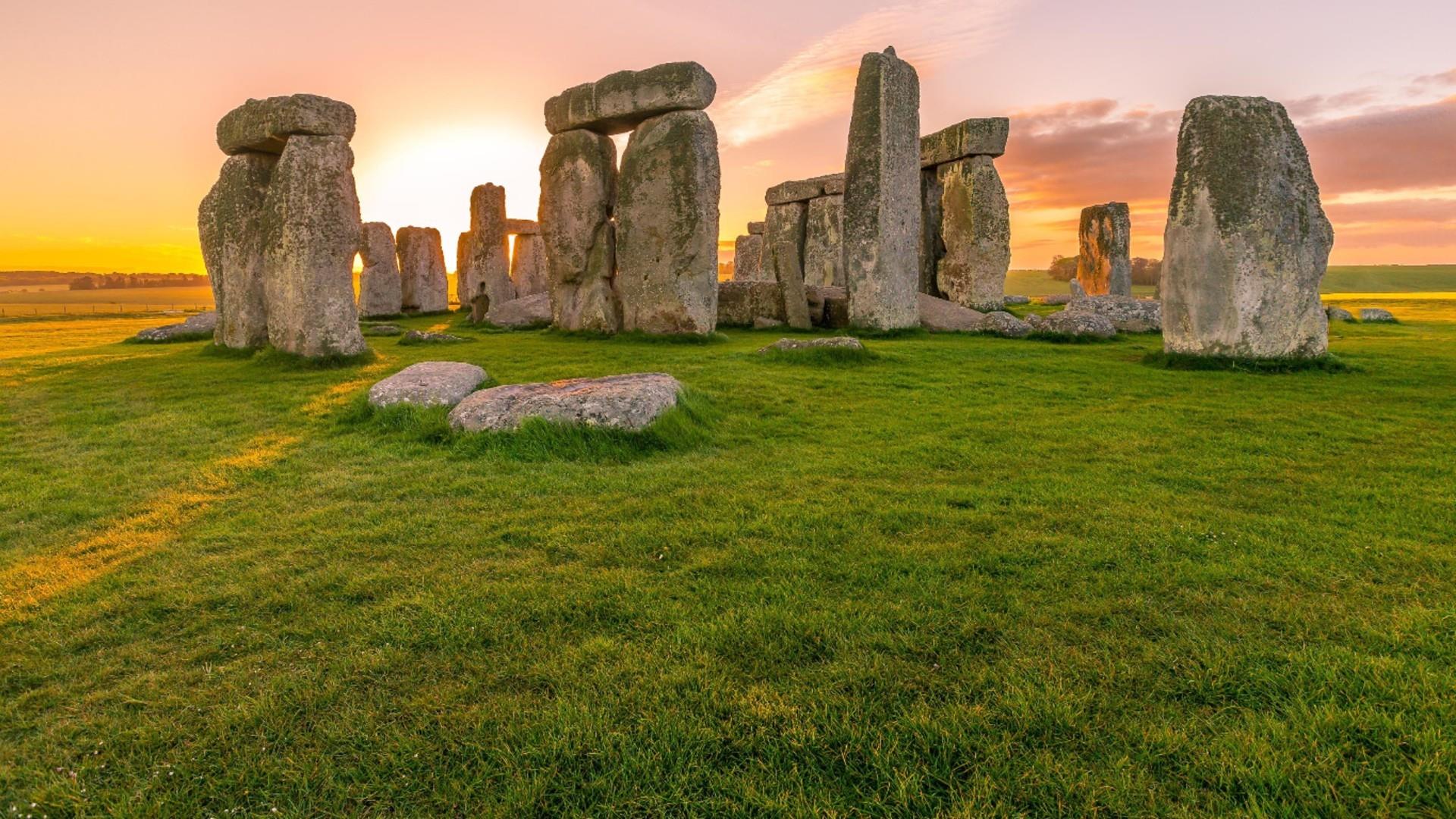 Stonehenge
 Bath is the only city in the UK to be a designated World Heritage Site in its entirety. In 2021, Bath received an exceptional second UNESCO listing as part of the Great Spa Towns of Europe.
 Choose a path less travelled to get to the heart and soul of England, creating your own journey through our history and our countryside.



 Maps and Guides
 Travel Information
 Special Offers
 Enewsletter
 Book Tickets
