





Opening Times
Sorry, this event has passed
About
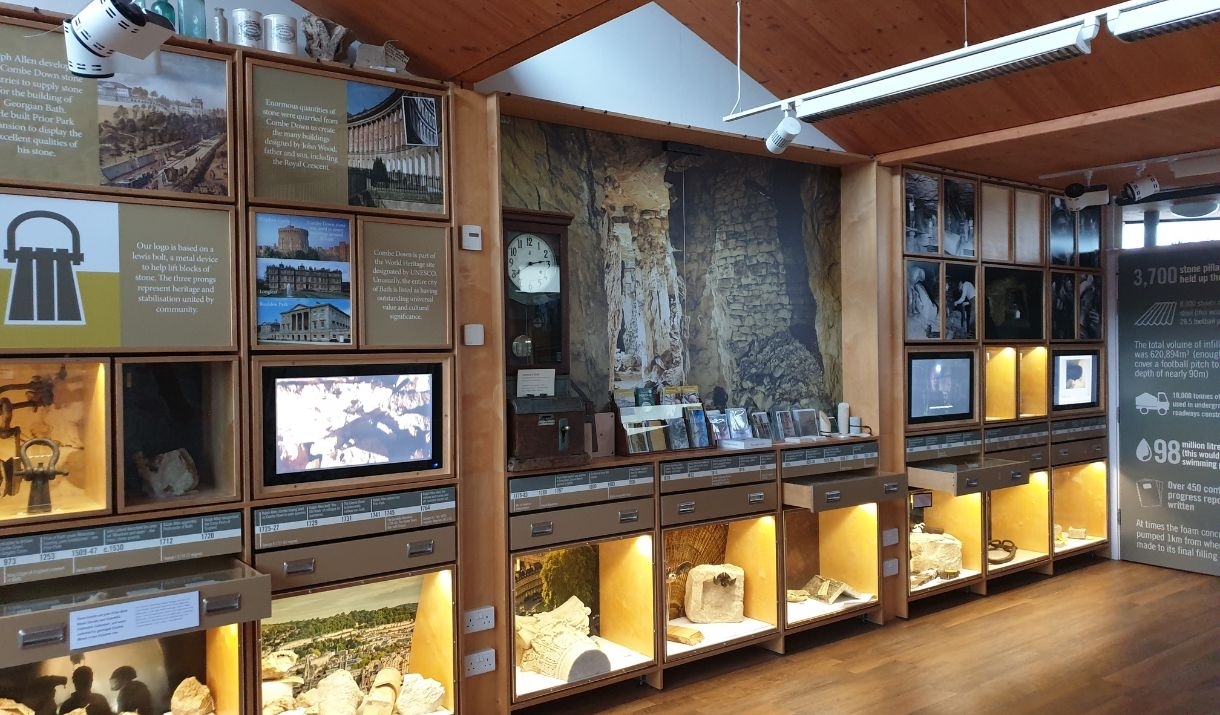
Discover the story of the stone of Combe Down, its geology, archaeology, social history, ecology (with important bat populations) and engineering at these free open days at the Museum of Bath Stone.
Bath owes much of its character and architectural harmony to the stone from which it is built, Bath Stone. This material has been exploited since Roman times but came to its peak in the 18th century. The nearby village of Combe Down was a great source of such stone, which was originally laid down in the Jurassic period in warm tropical shallow seas. The city's buildings are made of this stone hewn by hand using axes, saws (frigbobs and razzers), picks and candlelight. Being a freestone, which means it can be carved from any side, some buildings are highly decorated.
Many great buildings in the UK also owe their character to Bath Stone e.g. Windsor Castle, Buckingham Palace, Brighton Royal Pavilion, plus several abbeys and cathedrals. It was transported worldwide and has been designated a World Heritage Stone in its own right. So, we have a UNESCO World Heritage city built of a World Heritage Stone.
The Museum of Bath Stone was created in 2014 to complete the legacy of the Combe Down Stone Mines Stabilisation Project. The quarrying had left the area at risk. This project filled up the disused stone mines under Combe Down, with a foamed concrete, poured into the mines over 10 years. The exhibits in the museum will allow you to discover the process of this project.
Book Tickets Online
Show Facilities



 Maps and Guides
 Travel Information
 Special Offers
 Enewsletter
 Book Tickets